

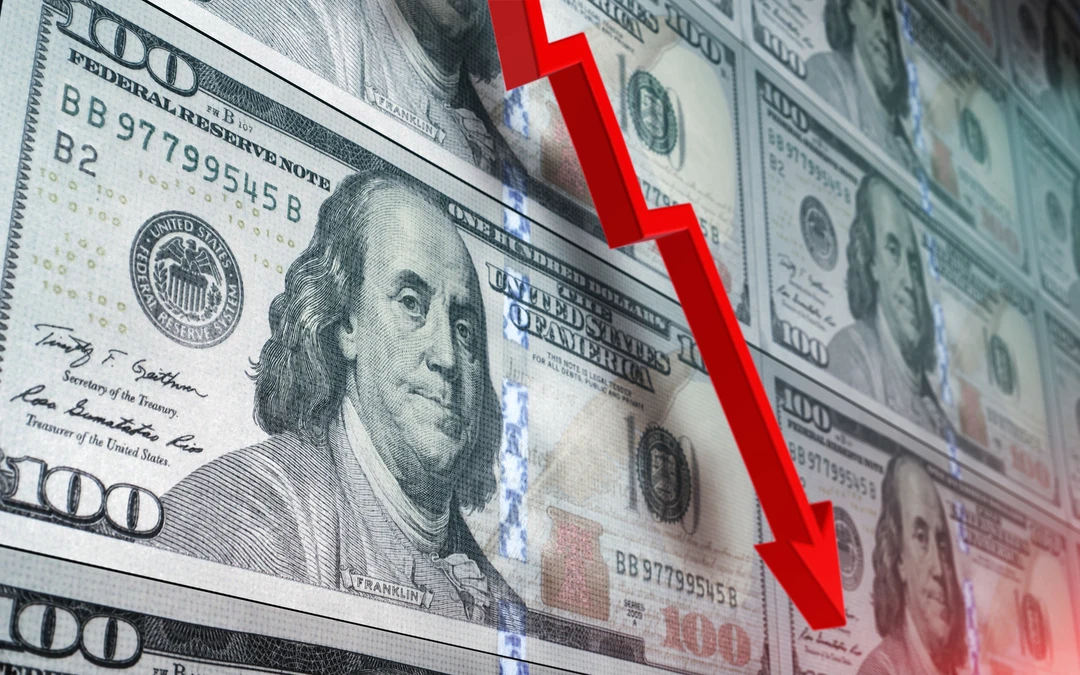
The U.S. dollar, historically regarded as the cornerstone of the global financial system, has experienced significant depreciation in recent months, raising concerns worldwide. What was initially perceived as a temporary fluctuation is now emerging as a broader economic challenge, with ripple effects felt across continents.
During the first half of 2025, the dollar has weakened substantially against a basket of major currencies, dropping approximately 10 to 11 percent. Despite nominal interest rates in the United States remaining higher than those of many international peers, inflation has eroded real yields, reducing one of the dollar’s core attractions for investors. Additionally, growing uncertainty surrounding U.S. economic policies, inflation pressures, and trade policy volatility has sparked questions about the long-term stability of the American financial framework.
Global markets have responded swiftly. Several countries are actively moving away from their heavy reliance on the dollar for trade and reserves, a trend commonly referred to as “de-dollarization.” BRICS nations, in particular, have accelerated discussions around alternative instruments for trade and settlement. Meanwhile, the dollar’s depreciation has produced complex outcomes for trade and inflation. For the United States, imports are becoming more expensive, exerting upward pressure on domestic prices. Countries with dollar-denominated debt are also experiencing rising repayment costs as their local currencies fluctuate against the weakening dollar.
The implications extend beyond immediate market turbulence. For decades, the United States has benefited from what economists term the “exorbitant privilege”—the ability to borrow cheaply in its own currency due to global trust in the dollar. A decline in this trust would weaken America’s unique position in the global economy. Policymakers now face challenging trade-offs, as measures to support the dollar—such as monetary tightening, clear trade policies, or adjustments to interest rate strategies—carry significant domestic political and economic costs.
Despite these concerns, many analysts believe that a complete erosion of dollar dominance is unlikely to occur overnight. The depth and liquidity of U.S. financial markets remain unmatched, and no other currency is currently positioned to replace the dollar’s global role. Nevertheless, if current trends continue, the dollar could face further sharp declines over the next year, reshaping trade balances and financial flows across the world.
The international community is closely monitoring developments in Washington. The decline of the dollar is more than just a market adjustment; it may signal growing global skepticism regarding the strength and stability of the American financial system. How the U.S. responds will determine not only the dollar’s trajectory but also the future architecture of the global financial framework that has relied on it for decades.
Leave a Reply