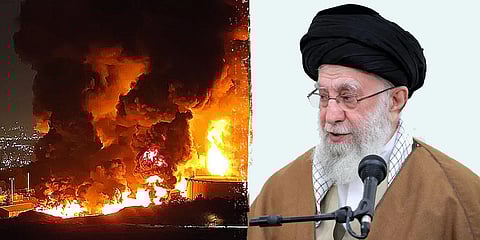
Unprecedented Strike Escalates Middle East Tensions and Raises Global Security Concerns
In a dramatic and highly controversial development, Iran’s Supreme Leader Ayatollah Ali Khamenei has reportedly been killed following a coordinated military operation allegedly carried out by the United States and Israel. If officially confirmed, this event would mark one of the most significant geopolitical turning points in recent Middle Eastern history.
According to initial reports circulating from regional sources, the large-scale strike targeted key military and leadership facilities in Tehran. The operation is said to have involved precision airstrikes aimed at dismantling high-level command structures. Iranian authorities have not yet released a comprehensive official statement, but state media outlets have indicated severe damage to strategic locations within the capital.
What Happened During the Operation?
Preliminary details suggest that the strike occurred late at night, targeting compounds believed to house senior political and military leadership. Eyewitness accounts describe multiple explosions across parts of Tehran, followed by heightened security activity in surrounding districts.
Military analysts say such a coordinated operation would require advanced intelligence gathering and precise execution. While the United States and Israel have not formally confirmed direct involvement in public briefings at the time of writing, global defense observers note that tensions between Iran and both nations have been steadily rising in recent months.

Immediate Reactions Across the Globe
The reported death of Iran’s Supreme Leader has triggered swift reactions worldwide:
- Iran: Authorities have reportedly placed security forces on high alert nationwide. Calls for national unity and possible retaliation are circulating among senior officials.
- United States and Israel: Officials have not issued detailed comments but have previously stated their commitment to countering Iran’s regional influence and nuclear ambitions.
- Middle Eastern Nations: Neighboring countries are closely monitoring developments, fearing regional instability.
- Global Markets: Oil prices and financial markets showed early signs of volatility amid uncertainty over potential retaliation or escalation.
Political experts warn that if confirmed, this development could reshape diplomatic relations and military alignments across the region.
Political Impact Inside Iran
Ayatollah Ali Khamenei had served as Iran’s Supreme Leader for more than three decades, overseeing both domestic policy and foreign strategy. His leadership shaped Iran’s position on nuclear development, regional alliances, and relations with Western nations.
His reported death may create a leadership vacuum, potentially triggering internal power struggles among political factions. Iran’s constitutional framework provides mechanisms for succession, but the process can be complex and politically sensitive.
What This Means for the Middle East
The Middle East has long been a region marked by fragile alliances and periodic conflict. A high-profile assassination or military strike involving global powers could intensify proxy conflicts, disrupt diplomatic negotiations, and increase the risk of direct confrontation.
Security analysts emphasize that the coming days will be critical. The level of response from Iran and its regional allies will likely determine whether the situation escalates further or moves toward diplomatic containment.
Global Security Outlook
Beyond the Middle East, international governments are preparing for possible ripple effects. Energy markets, trade routes, and global diplomatic efforts could all be influenced by how this situation unfolds.
At this stage, many details remain unverified. Governments and international organizations are urging restraint while awaiting confirmed information.