

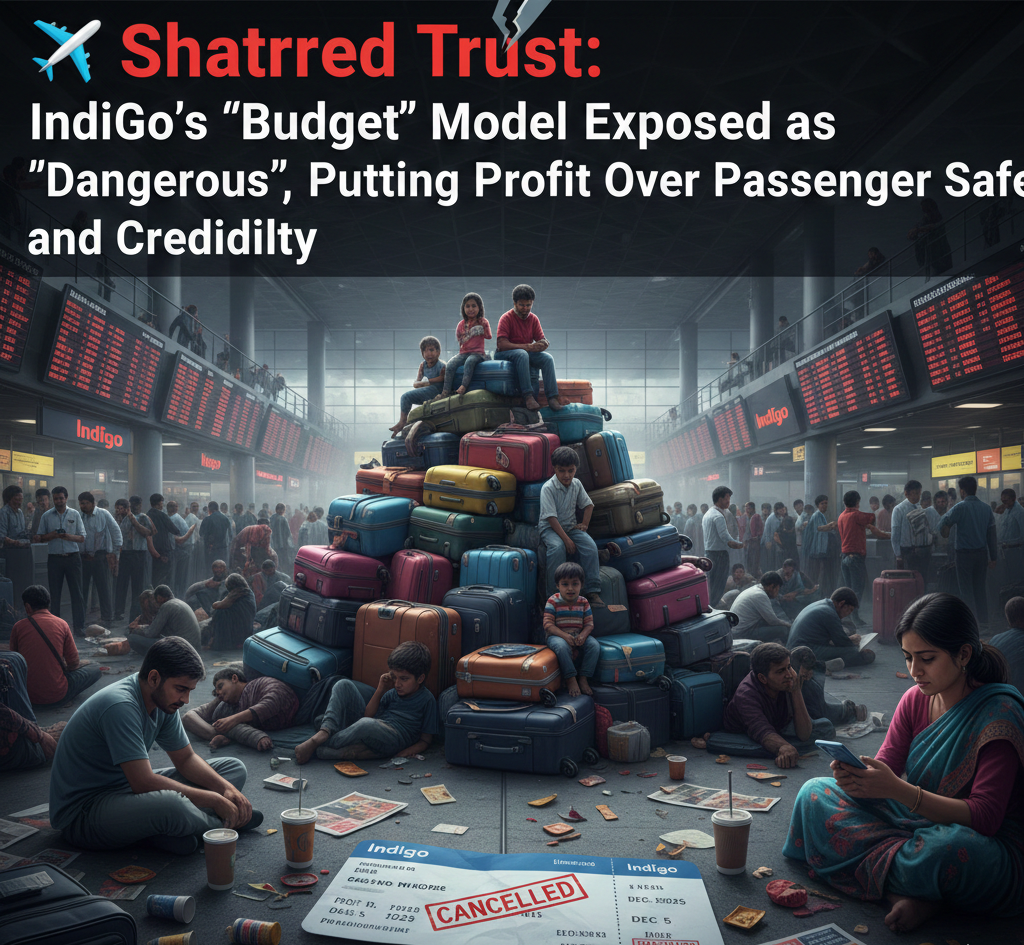
The operational chaos that crippled IndiGo, India’s largest airline-which cancelled over 1,000 flights in a single day, December 5, 2025, and stranded thousands of passengers during the peak travel season-was no unavoidable tragedy; it was a calculated corporate failure.
A deep dive into the recent meltdown exposes a company knowingly putting its “high-utilization, cost-efficient” business model ahead of simple regulatory compliance and, importantly, passenger safety. The crisis has fundamentally shattered the brand’s image of reliability, raising serious questions about ethical leadership and long-term viability connected to an airline which failed to staff its aircraft adequately over many months.
The Truth: A Reckless Bet Against Safety
The immediate cause of the shutdown was the enforcement, by the DGCA, of new and more stringent norms concerning pilots’ rest and duty hours (FDTL) starting November 1, 2025. These rules aimed at reducing pilot fatigue with longer weekly rests and limitations on night flying had been announced a year in advance.
But executive management at IndiGo ignored the clear warning.
Rather than hire the needed buffer crew to meet lifesaving safety standards, the airline clung to a minimal staffing model, reportedly operating with only a 4% crew buffer. When these new rules finally hit, this reckless planning blew spectacularly, forcing the massive, systemic cancellations that defined the four-day crisis. This is not poor planning; it is profound dereliction of duty that treats DGCA safety mandates as optional until the moment operational collapse makes it impossible to hide.
Chaos and Contempt for the Consumer
Its human cost was immediate and devastating: city hubs like Delhi, Mumbai, and Bengaluru became scenes of nationwide travel anarchy. Passengers booked for holiday and festive travel faced overflowing terminals, long queues, and the nightmare of unclaimed luggage piling up. The airline’s on-time performance tumbled as low as 8.5% at major airports-an ignominious metric for a carrier built on the promise of punctuality.
The public apology by CEO Pieter Elbers, though welcome, brought little comfort to the stranded families who had to scramble for highly inflated last-minute tickets on rival carriers. An apology does not erase the deliberate choice to run a company so lean that its operation teeters on the brink of collapse, making thousands of innocent travelers collateral damage in its pursuit of profit margins.
The Regulatory Red Flag
The final indictment of IndiGo’s internal operations came when the crisis became so unmanageable that the DGCA had to issue a temporary exemption to the airline from certain FDTL provisions.
This exemption is not an indication of relief, but a red flag. It underlines the fact that IndiGo was so incapable of meeting mandated safety and operational standards that the government had to step in and temporarily lower the bar as a way of keeping the national air network from seizing up.
In fact, the message, loud and clear for millions of passengers, is that IndiGo’s commitment to safety standards is conditional; its operational stability is dependent upon government hand-holding rather than competent internal management. This incident is a dark stain on the brand’s credibility. For an airline that positions itself as India’s leading carrier, the mass cancellations expose a business strategy which views regulation as an obstacle and passenger safety as a manageable risk. Until IndiGo proves it can invest in the staffing and planning required to meet basic safety mandates without crashing, its promise of reliable air travel rings hollow. Consumers must now ask themselves: is this cost-cutting giant worth the risk?
Leave a Reply