

400-Year-Old Painting May Have Captured a Wildlife Mystery Long Before Modern Science
For centuries, Renaissance paintings have been admired for their artistic brilliance, symbolism, and meticulous attention to detail. Now, one of these masterpieces is attracting attention for an entirely different reason. Researchers believe a small detail hidden inside a 1611 painting may represent a rare wildlife behavior that scientists only confirmed in recent years.
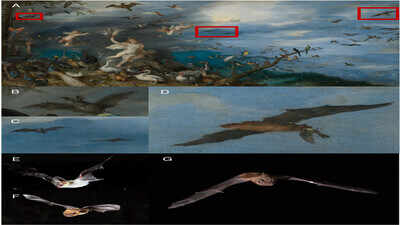
The artwork, Air, was painted by Flemish artist Jan Brueghel the Elder in 1611. Known for his realistic depictions of plants and animals, Brueghel filled the canvas with dozens of bird species and several bats. At first glance, it appears to be a traditional allegorical painting. However, a closer examination reveals a surprising scene a bat flying while holding a small bird in its mouth.
A Behavior That Science Confirmed Centuries Later
The bat shown in the painting closely resembles the Greater noctule bat, Europe's largest bat species. Unlike most bats, which primarily feed on insects, the greater noctule has long been suspected of hunting migrating songbirds during nighttime flights.
Although scientists discovered feathers in the droppings of these bats years ago, direct evidence of bird hunting remained elusive. Only recently have advances in lightweight tracking devices and acoustic monitoring allowed researchers to observe and confirm that greater noctule bats actively capture birds while flying at high altitudes during migration.
This makes the painting remarkable. If Brueghel intentionally painted a bat carrying a bird based on real observation, it would mean the behavior was documented visually more than 400 years before modern technology verified it.
Can Art Help Science?
The discovery has renewed interest in the idea that historical paintings may contain valuable records of nature. Artists often spent years observing animals, landscapes, and plants directly before including them in their work. While their primary goal was artistic expression, some may also have unknowingly documented ecological events that were difficult for scientists to verify at the time.
Researchers caution that the painting alone cannot serve as scientific proof. However, when viewed alongside modern biological evidence, it offers an intriguing historical clue that supports current understanding of the greater noctule's unusual hunting behavior.
A Meeting Point Between History and Biology
The study demonstrates how science can benefit from looking beyond laboratories and field observations. Museums, libraries, and historical archives may preserve overlooked details that help explain the natural world.
Whether the scene in Air was based on direct observation or extraordinary artistic insight, it reminds us that careful observers have been recording nature for centuries. Sometimes, the answers to modern scientific questions are hidden not in the latest technology, but in masterpieces created hundreds of years ago.
Share this article
Your Career Starts with
the Right Guidance