“$1 Trillion Crypto Meltdown: Will Bitcoin Crash Deeper or Is a Surprise Rebound Near?
The global cryptocurrency market has entered one of its most dramatic phases in recent years, triggering a wave of uncertainty among investors, exchanges and institutional funds worldwide. With more than $1 trillion in market value erased within weeks, the question dominating sentiment today is simple yet unsettling is Bitcoin preparing for a deeper fall, or is the next rebound quietly taking shape beneath the fear?
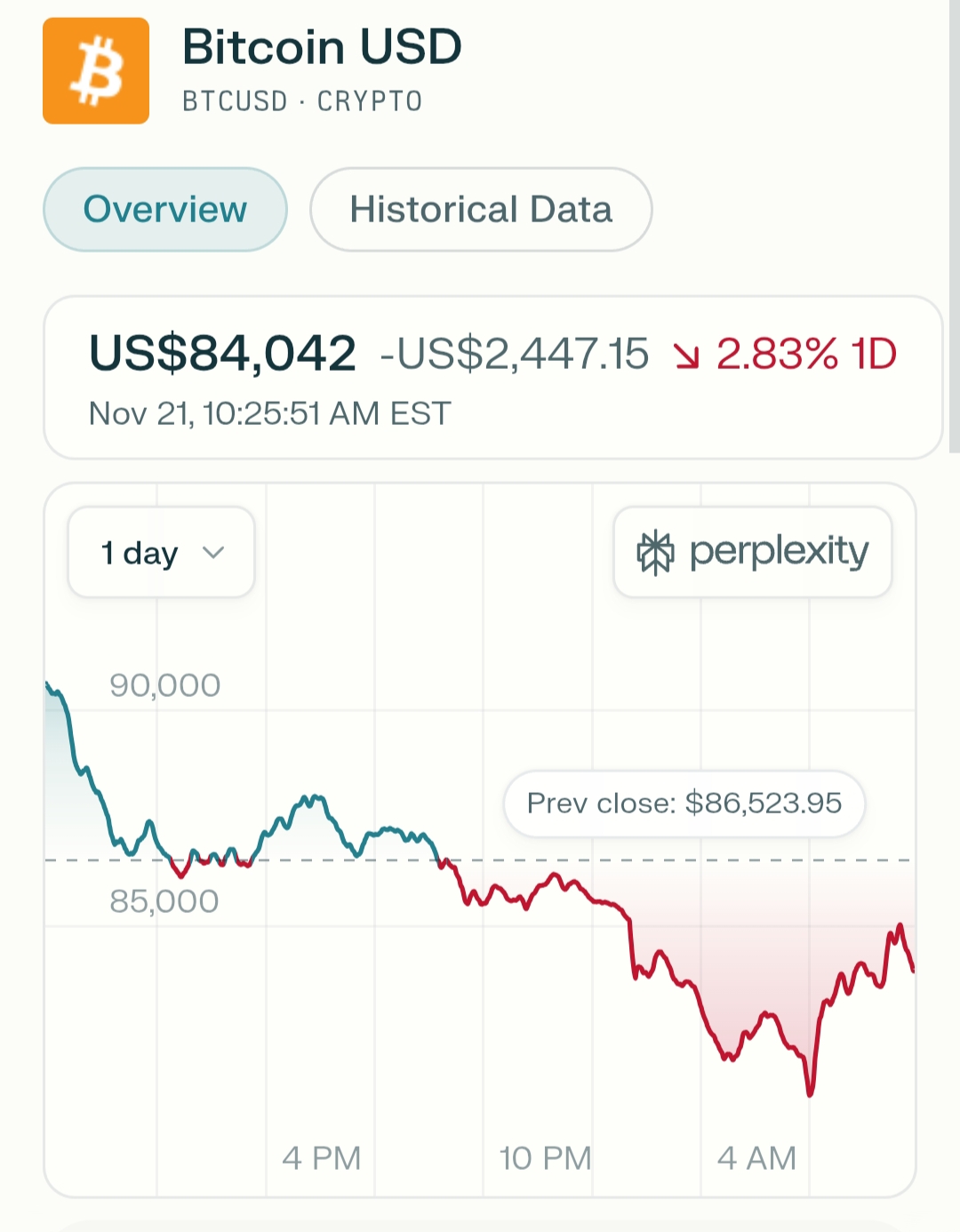
Bitcoin, the world’s largest digital asset, slid below the $83,000 mark earlier this week, a level that analysts consider psychologically as well as technically crucial. The slip came at a time when global markets are witnessing a sharp retreat from risk-heavy assets. Reports indicate that fears of delayed interest-rate cuts by the U.S. Federal Reserve, thinning liquidity, and persistent volatility have put Bitcoin under pressure far beyond ordinary fluctuations. Even the options market is signalling caution, with bearish positions rising sharply and several models now suggesting almost a 50% probability that Bitcoin may end the year below the $90,000 threshold.
Adding to this downturn, a massive wave of leveraged liquidations swept through the market in early October, wiping out billions in speculative positions. This liquidation cascade weakened the technical foundation of the recent bull cycle, leaving buyers significantly more hesitant. The broader sentiment reflects a market in pause not a collapse, but a moment where investors are reassessing risk, monitoring macro-signals, and waiting for clarity rather than chasing aggressive entry points.
Yet, despite the bearish mood, the possibility of a rebound hasn’t disappeared. Several global analysts believe Bitcoin is sitting at what could become a critical accumulation zone if conditions stabilise. If macro-data begins to hint at easing pressures, or if institutional flows return with confidence, the market may witness a relief rally that pushes Bitcoin back towards the $100,000 to $105,000 range. Long-term projections, especially from institutional research desks, continue to emphasise that the structural adoption of crypto remains intact. This suggests that while short-term turbulence is strong, the foundational narrative of Bitcoin as a long-term asset has not been erased.
For now, the crypto ecosystem stands at a crossroads. On one side lies the possibility of extended correction, particularly if global risk conditions deteriorate further. On the other, a surprisingly swift reversal could emerge if investors view the current decline as a discounted entry opportunity rather than a collapse. The market’s next decisive move will depend heavily on liquidity flows, institutional confidence, regulatory clarity, and the broader global appetite for risk assets.
In the midst of this, one thing is clear: Bitcoin’s current phase marks a transition from hype-driven speculation to informed caution. The conversations within the crypto community both retail and institutional are shifting from “how high can it go” to “how strong is its foundation.” As the world watches this unfolding correction, the next few weeks are expected to shape the narrative of the coming year for digital assets, defining whether this is merely a turbulent chapter or the start of a deeper reset.